
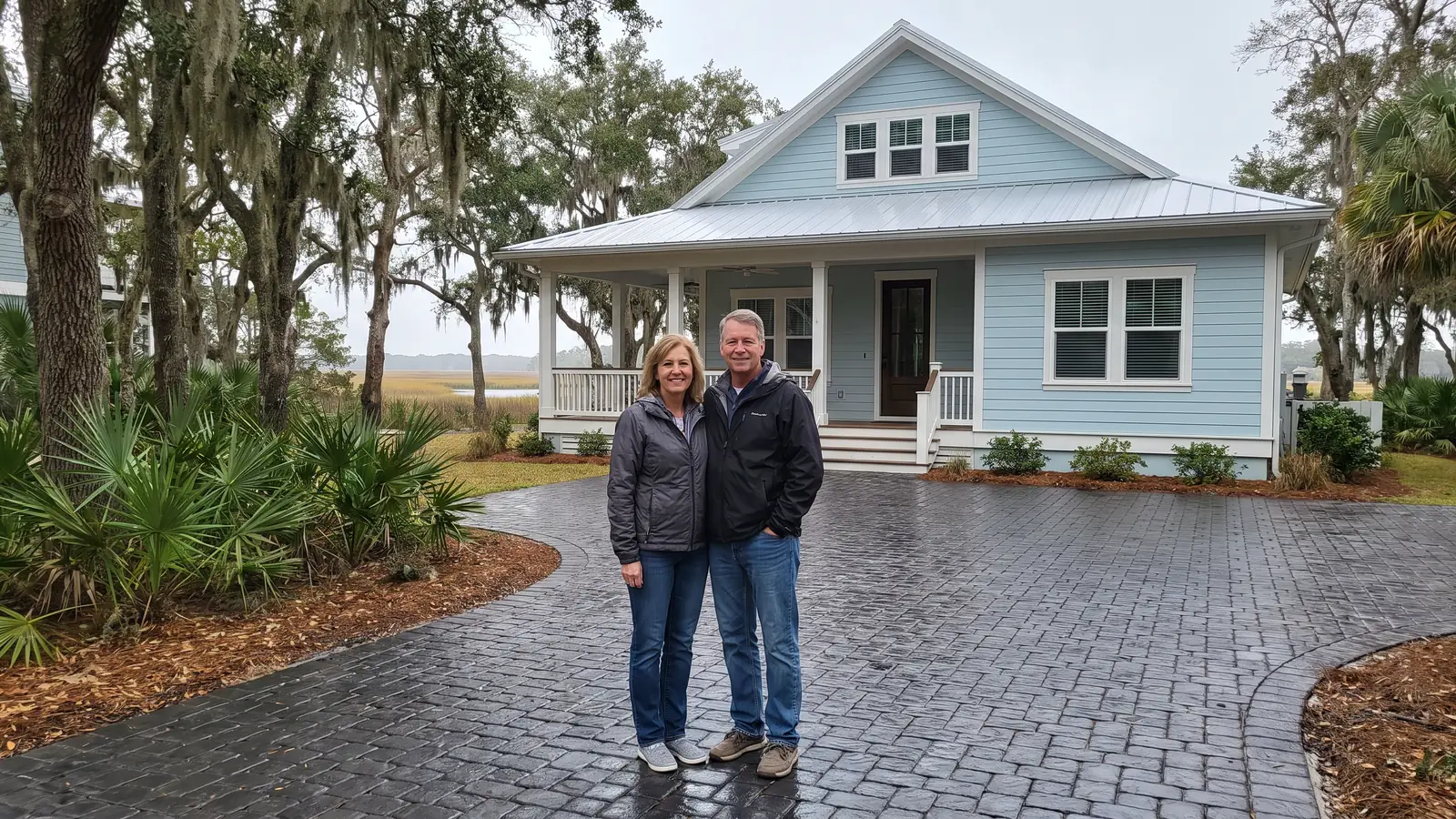
Paver sealing for San Pablo homes
Paver Sealing in San Pablo, FL
Pool decks, drives and walks in San Pablo can call for different sealers; call (912) 741-3281 for a free estimate.
- Brings out deeper paver color
- Fresh joint sand helps lock pavers in place
- Gives weeds less room to grow
- Makes the surface easier to keep clean
- Free estimate, no obligation
Request a Free Estimate
Free, no obligation.
Fast, careful paver sealing in San Pablo
Paver sealing is available across San Pablo, from the homes along San Pablo Road to the gated streets of Queens Harbour. The contractor cleans, re-sands and seals pavers on drives, walks, pool decks and patios, and the estimate carries no charge. Call (912) 741-3281; the reply arrives within 1 business day, usually much sooner.
Imagine a pool deck gone chalky and rough, or a front walk that has turned gray with a dull film and weeds in the joints. After a gentle wash, new sand and a sealer chosen for that surface, the color deepens and the stones look even again. If you want a plain answer on which product fits which surface, you can ask for a free estimate online and ask.
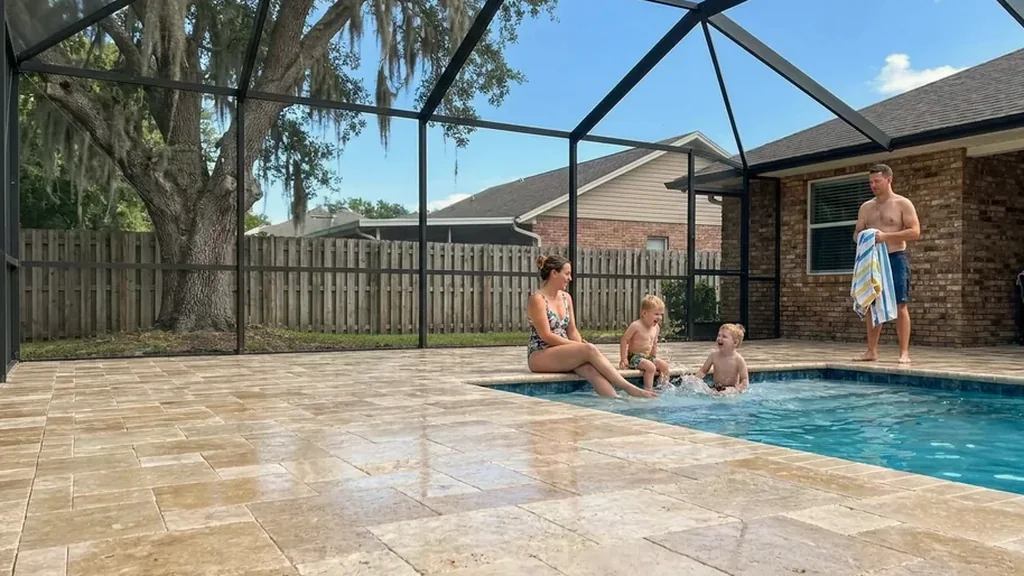
Why hire a local paver sealing contractor in San Pablo?
San Pablo has pool decks, townhome courts, driveways and marsh-side walks, and each can call for a different sealer. To talk through the right match for yours, ask for a free estimate online.
A sealer for each surface
A pool deck, a driveway and a front walk do not wear alike. The contractor can name the product for each one before work starts.
What the published numbers say
Companies in the region commonly publish $1.75 to $3.25 per square foot to clean, sand and seal. Hold any San Pablo bid up to that range.
Straight talk on finish
Matte stays natural. A wet look deepens color but shows scuffs sooner, and some sealers can get slick when wet, so ask before you choose.
Free, with a reply in 1 business day
The estimate costs nothing and carries no obligation to hire anyone. You hear back within 1 business day, usually much sooner, and you set the date.
Get Your Free Estimate in San Pablo
Tell us about your pavers in San Pablo.
Free, no obligation
What paver problems show up most in San Pablo?
A sealer that suits the drive but not the pool deck
A Jacksonville cost guide says film-forming sealers can trap moisture and create slip hazards, so most Jacksonville pool decks get a penetrating sealer that keeps traction even when wet. A film is common on drives. San Pablo has both kinds of surface, often on one lot. The wrong product on the wrong surface is the mistake worth avoiding, and it is easy to prevent by asking the contractor to name each product before the work is booked.
Salt and damp air from the marsh
Castaway Island Preserve is 311 acres of salt marsh on the west bank of the Intracoastal Waterway, with homes to its west and south. Airborne salt can crystallize on a surface as moisture dries, according to a paver maker, and humid air keeps more water in the material. Pavers near the marsh may stay damp and collect residue longer. That is one reason a San Pablo job may need a slower drying day than a job inland. A sealer cannot fix salt that is already on the surface, so the wash comes first.
Joints emptied by summer storms
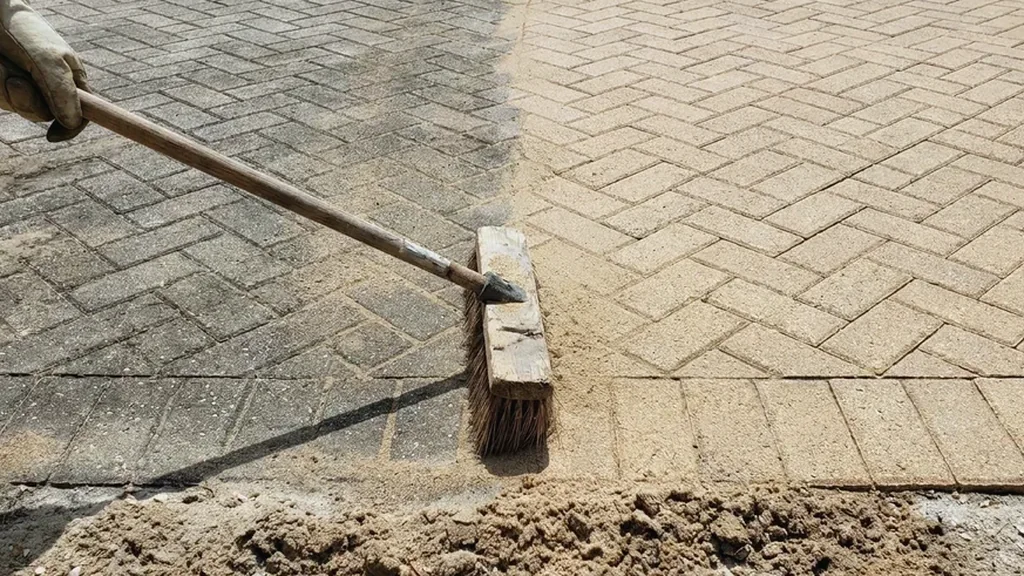
Safe Touch's Jacksonville page says summer storms pull sand out of pool decks and driveways, and that sealing over empty joints is how weeds come back. Jacksonville gets its heaviest rain from May through September. If you can see gaps between your stones, the sand needs to be restored before any coat goes on. A pool deck that loses sand each summer is a good sign the joints were never locked in. Tell the contractor which areas lose the most.
Newer pavers that are not ready
Some San Pablo homes were built from 2000 on, and their pavers may be young. One Jacksonville company advises waiting 30 to 60 days after installation before a first seal, and another says 60 to 90 days so white mineral haze can surface and be treated. Sealing too soon can trap that haze. If your home is new, ask the builder or installer for the date the pavers went in, and keep that date for the estimate.
A coat from the second or third owner
Most San Pablo homes were built between 1970 and 1999, and on San Pablo Road S most date to the 1970s and 1980s. Pavers added since then may carry a coat nobody wrote down. A water-based sealer cannot go over a solvent-based one, so the contractor has to find out what is there before choosing the next coat. A patchy or peeling area is a clue worth pointing out. Old receipts or the name of a past company can speed this up.
How do I pick a sealer for a San Pablo condo, townhome or house?
Start with the surface and who owns it. Of 35 homes on San Pablo Road S, 12 are single-family and 23 are condos, townhomes or other, so some walks and courts may be shared. Isle of Palms and Pine Harbour both sit on that road, with single homes in Brentwood, Santa Monica, Oak Landing and Sterling Ridge. Tell the contractor if yours is a house, a townhome or a condo when you ask for a free estimate online.
Gated places add a step to the booking. Queens Harbour has been open since 1988, was planned for about 950 home sites and is gated around the clock. A Jacksonville paver page says gated communities may limit contractor hours and vehicle access, so ask the gate office what a contractor needs to get in. Then call (912) 741-3281 and say when the gate is easiest, since Tamaya and Holiday Harbor have their own entry rules.
Finish rules matter as well. In Intracoastal West, a neighborhood may charge HOA fees, CDD fees or both. Florida Statute 720.3035 says an HOA must apply its standards equally and put a denial in writing. A paver page says color or wet-look finishes are more likely to need approval, so check your rules, then ask for a free estimate online.
What does paver sealing cost in San Pablo?
San Pablo bids are priced per square foot, and companies in the region commonly publish $1.75 to $3.25 to clean, sand and seal. The product moves the number too. A paver product maker says acrylics are the economical choice but may scratch easily, while polyurethanes are tougher and typically cost more. To price your own San Pablo pavers, ask for a free estimate online.
Size and stripping matter next. Smaller projects cost more per foot because prep time does not shrink with the area, and old failed sealer must be stripped before a new coat goes on. A townhome patio or a lanai can land at the high end for that reason, and a long run of walks can land lower. Call (912) 741-3281 and the contractor can tell you which of these apply to your San Pablo home.
| Paved area | Typical example | Clean, sand and seal |
|---|---|---|
| 300 sq ft | Small patio or walkway | $525 to $975 |
| 600 sq ft | Two car driveway | $1,050 to $1,950 |
| 1,000 sq ft | Large driveway or pool deck | $1,750 to $3,250 |
| 1,500 sq ft | Driveway plus pool deck | $2,625 to $4,875 |
Math based on the $1.75 to $3.25 per square foot that Northeast Florida paver companies publish. Your contractor sets the actual price after seeing the surface. Repairs, leveling and stripping failed sealer are usually extra.
How does a paver sealing job work in San Pablo?
Match a product to each surface
The contractor starts by listing every paved area and what it faces. A pool deck, a drive and a marsh-side walk each get a product plan. A trade supplier sorts sealers into film-forming acrylics that sit on top and penetrating products that soak in and leave the look unchanged. The contractor also checks for an old coat, because a water-based sealer cannot go over a solvent-based one.
Clean with care, and treat the stains
Washing comes next, and it is done with care. The same supplier warns that going above 3,000 PSI on standard concrete pavers risks stripping the surface, so pressure is kept moderate. Oil, tire marks and sprinkler rust are treated first. Watering limits mean the same spray hits the same stones on the same days, so rust often shows in a repeating pattern.
Restore the joint sand
Cleaning draws sand out of the joints, so fresh sand goes in before the coat. If polymeric sand is used, one Jacksonville company says it needs a long dry spell to set. Joints that are full hold the stones together and give weeds less room. The contractor sweeps the surface clean afterward, so loose sand does not sit on top of the stones when the sealer goes on.
Give the pavers time to dry
A Surebond bulletin says most of its sealers need the surface to dry 24 hours after cleaning or rain, so moisture is not trapped. Near the marsh that can take longer. A Jacksonville company says sealing damp pavers is behind nearly every complaint of sealer turning white. The contractor waits, even when the weather looks fine, because a day of patience costs less than a cloudy coat.
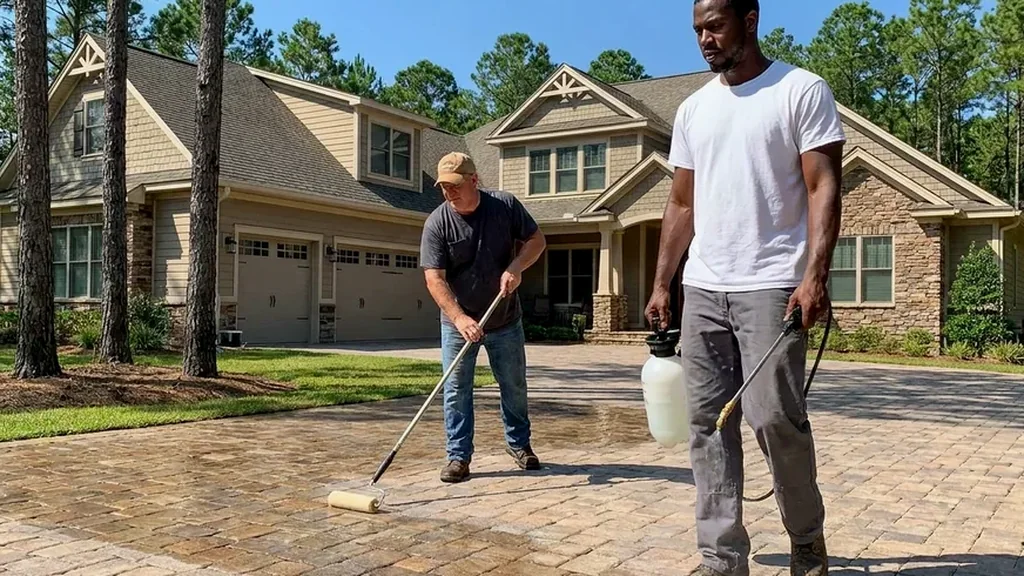
Spray, back-roll and keep off
Sealer goes on with a sprayer, and a roller follows to push it into the joints. Foot traffic can usually resume in a few hours, and cars should stay off about a day. The Surebond bulletin asks for 24 hours of dry weather for curing. A wet look shows scuffs sooner than matte, and quotes of two to five years between coats are common. Water that beads on the surface means the coat is working, and water that soaks in means it has worn. Plan around the first day after the job, when cars and kids should stay off.
Complete paver services in San Pablo
On a San Pablo lot, the work runs in a fixed order, and none of it is skipped: choose the product, wash, re-sand, let it dry and seal. Choosing the product comes first, which is not true of every job, because a pool deck and a driveway are not treated alike. To ask how your lot would be handled, call (912) 741-3281.
Each surface here has its own story. A pool deck takes splash, sunscreen and furniture scuffs, and strong chlorine or salt systems can leave residue. A drive takes tires and sun, while a marsh-side walk stays damp. Tell the contractor about all three when you ask for a free estimate online.
Sealer comes as solvent-based or water-based, and as a film on top or a penetrating product inside. Acrylics cost less but may scratch, and polyurethanes are tougher but pricey, so the right pick depends on how the surface is used. A Jacksonville company says film-forming sealers are typically redone every 3 to 5 years. Call (912) 741-3281 to ask which fits each of your surfaces.
Spring and fall often offer the steadiest weather for sealing, according to one Jacksonville company, and the dry months run from November through April. San Pablo mornings near the marsh can stay damp, so the contractor may start late in the day or wait. Storms in summer can move a date. If you have a deadline, say so when you ask for a free estimate online.
Questions to ask before you hire
- Do you replace the joint sand that washes out during cleaning?
- Do I get a matte, satin or wet look finish, and can I choose?
- Can you send proof of insurance before the work day?
- Can you clear the green algae along the edges near my sprinklers?
- Will you walk the job with me and point out cracked or sunken pavers first?
- Can new pavers be sealed right after they are installed, or should I wait?
- Will the estimate list the square footage, the sealer and the number of coats?
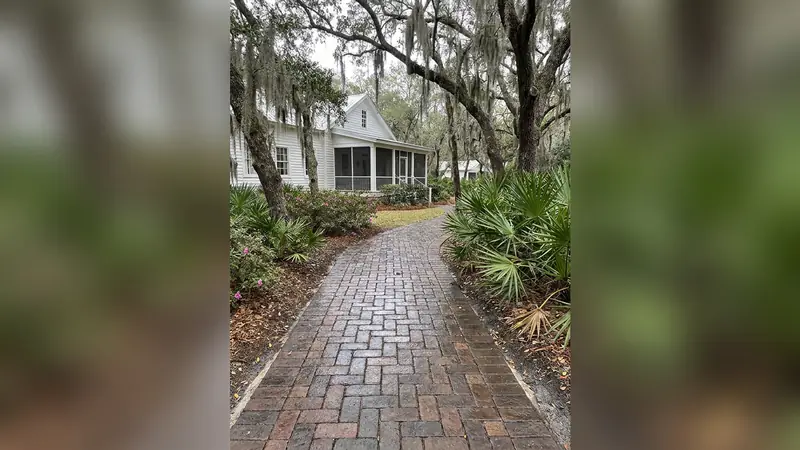
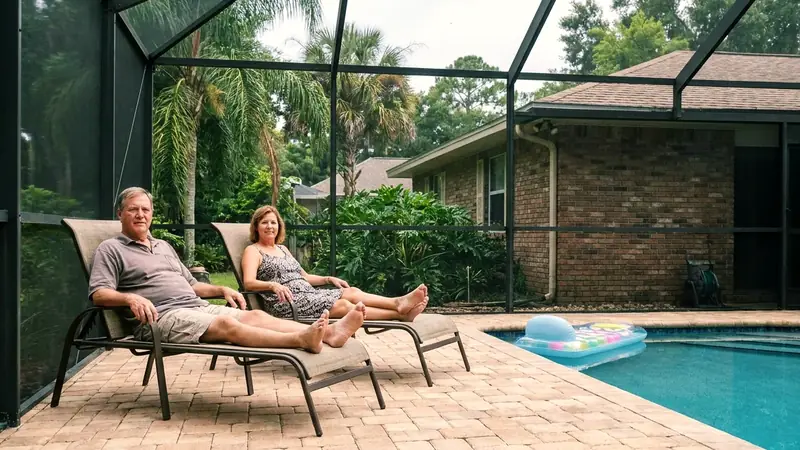
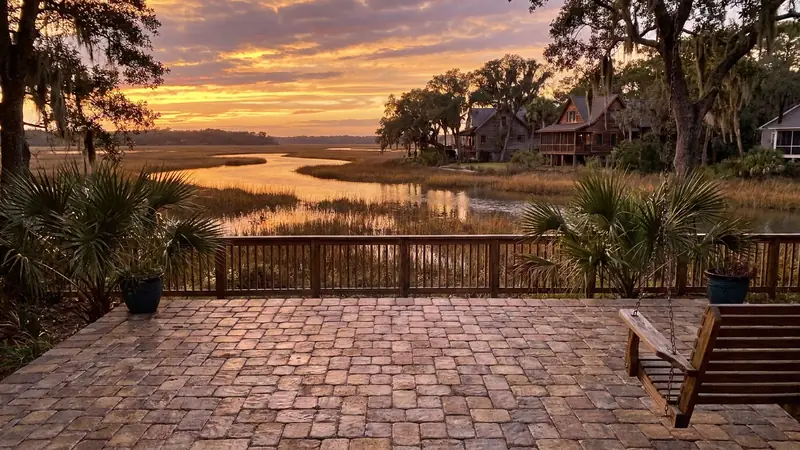
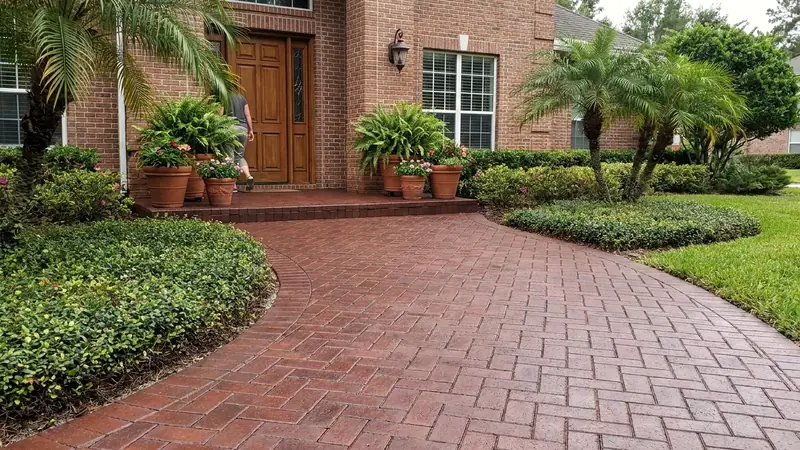
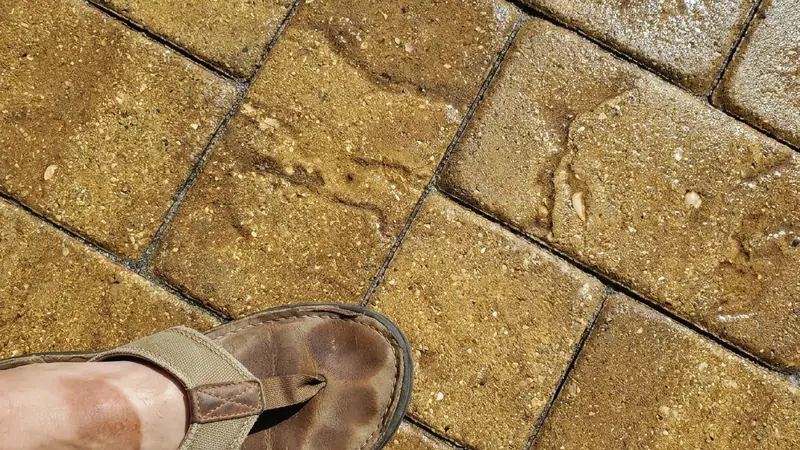
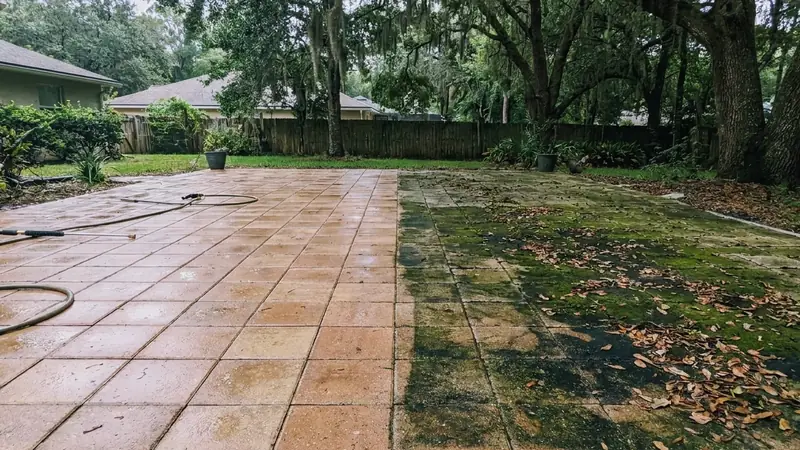
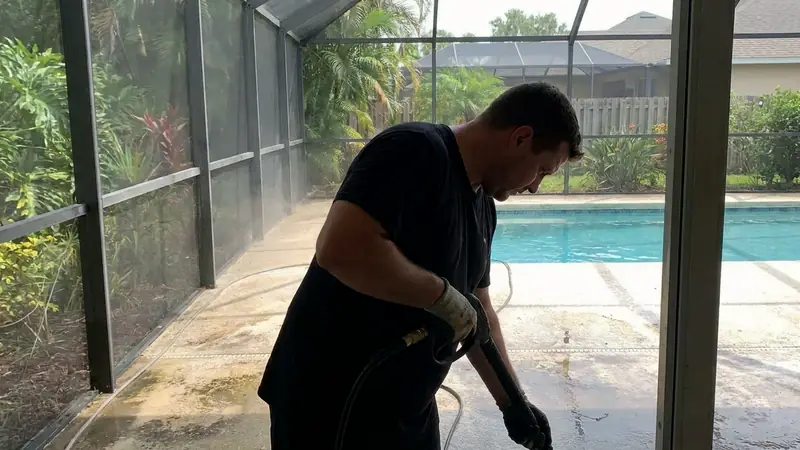
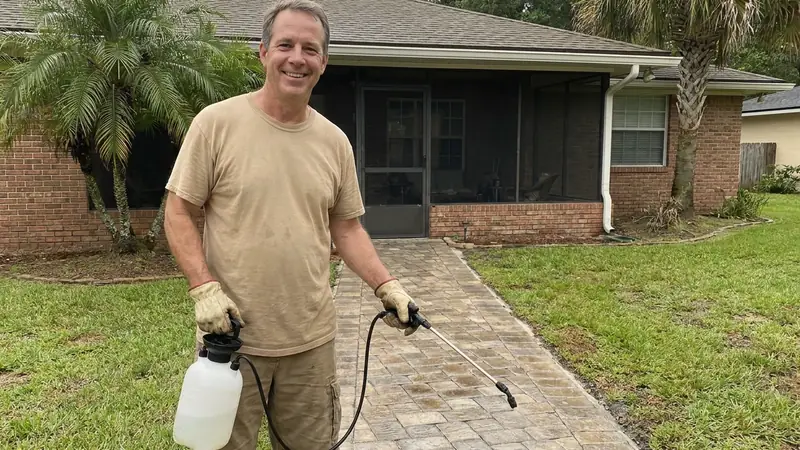
What do sealed pavers look like around San Pablo?
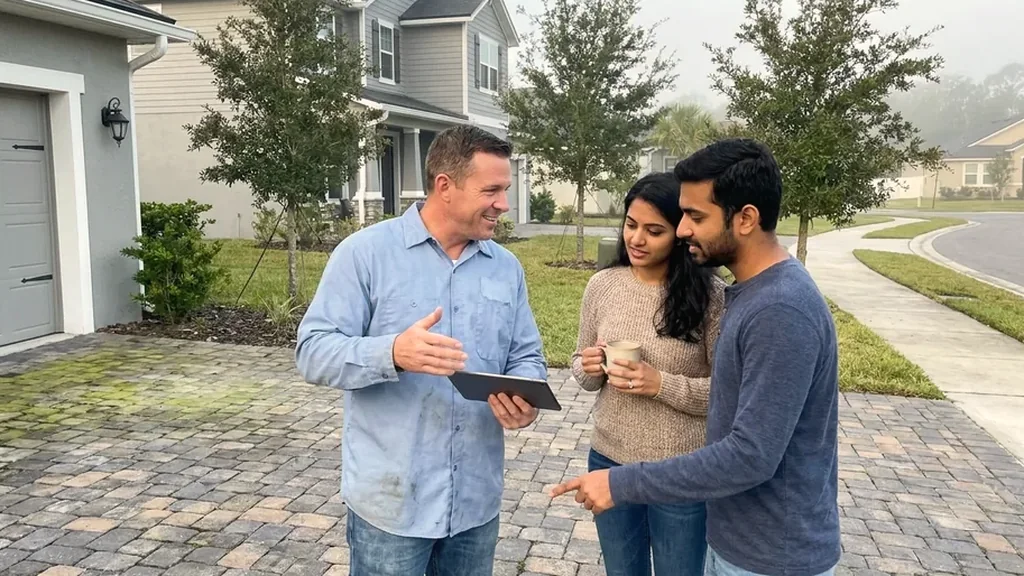
Why local matters in San Pablo
A contractor who works near Castaway Island knows what salt air and damp mornings do to a job, and has learned to read a surface before touching it. Drying time is the main risk, so a local pro will ask about shade, the marsh breeze and the last rain. A contractor from another county may skip that question. To reach a local contractor, call (912) 741-3281.
Local knowledge also covers gates and associations. Queens Harbour is guard-gated, Tamaya is a newer gated neighborhood, and Intracoastal West has HOA and CDD communities. A contractor used to this will ask about gate hours and finish rules early. Tell them where you live when you ask for a free estimate online.
The roads matter too. San Pablo Road runs past Holiday Harbor, Castaway Island Preserve and the Brumos Collection, and Beach Boulevard carries traffic to the Beaches. A contractor who knows them plans a drive that avoids surprises, and a clear address saves time. Give your cross streets and call (912) 741-3281.
What do I tell a contractor to show where my San Pablo home is?
Name the preserve or the road first. Castaway Island Preserve is at 2921 San Pablo Road South, and the city bought its land in 2000 with a Florida Communities Trust grant. It opened on June 5, 2004, with a 240 foot boardwalk. Homes lie to its west and south, so say if you are near it when you ask for a free estimate online.
The Jacksonville Beaches sit on San Pablo Island, and a channel dug in 1912 separated that land from the mainland. Beach Boulevard was dedicated on December 17, 1949, together with the B.B. McCormick Bridge over the Intracoastal. Mayo Clinic Florida is at 4500 San Pablo Road, so pick the nearest landmark and call (912) 741-3281.
Frequently Asked Questions
Is a sealer a good idea for pavers in San Pablo?
Yes, for most San Pablo pavers. One Jacksonville company says sun fades unsealed concrete pavers noticeably within 3 to 5 years and that sealer works like sunscreen for the color. Sealing also keeps joint sand in place through summer storms, which slows weeds. Stains such as oil or leaf tannin can soak in for good on unsealed pavers, which sealing helps prevent.
Why is paver sealing so expensive in San Pablo?
Most of the cost is prep. By one company's count, prep runs two to three times as long as the sealing itself. Washing, new joint sand and drying time take labor, and smaller jobs cost more per foot because that prep does not shrink with the area.
What is the price to re-sand and seal pavers in San Pablo?
Expect $1.75 to $3.25 per square foot, the regional published range, covering the wash, joint sand and sealer. Stripping a failed coat costs more. Ask for the total area, the sealer name and the price per foot in writing, so you can compare bids. A good bid also lists what is included, such as sand and washing.
Which paver sealer suits San Pablo homes near the marsh?
It depends on the surface. Film-forming acrylics sit on top and stabilize the sand, and penetrating products soak in and leave the look natural. Most Jacksonville pool decks get a penetrating type for grip. Have the contractor name the sealer planned for each surface.
Should I add sand to my San Pablo pavers before sealing?
Yes, the joints should be full before sealing. Washing removes joint sand, and one Jacksonville company says sealing over empty joints is how weeds come back. A contractor replaces the sand after the wash and sweeps it clean, then lets the surface dry.
Do sealed pool decks in San Pablo get slippery?
They can if the wrong product is used. A Jacksonville cost guide says film-forming sealers can trap moisture and create slip hazards, so most pool decks get a penetrating sealer that keeps traction when wet. Ask about the finish and traction before you agree to a coat, and ask what the contractor suggests for bare feet and wet days.
Can I seal new pavers in San Pablo right away?
Usually not. One Jacksonville company advises waiting 30 to 60 days after installation, and another says 60 to 90 days, so white mineral haze can come out first. Share the install date at the estimate and the contractor can plan the first coat. Joints should be re-sanded before that first seal.
Does my San Pablo HOA or CDD need to approve a paver sealer?
Possibly, if your rules cover finish or color. A Jacksonville paver page says a wet look or color change is more likely to need approval. Florida Statute 720.3035 says an HOA must apply its standards equally and put any denial in writing.
Ready for a Free Estimate in San Pablo?
Call (912) 741-3281 and tell us about your pavers.
Free, no obligation